Roof Soft Washing in Orlando: The Complete 2026 Guide
Roof Soft Washing in Orlando: The Complete 2026 Guide
If you’ve noticed dark streaks creeping across your roof, you’re not alone. It’s one of the most common calls we get here at JBC Pressure Washings — and the good news is that those stains are completely removable. The key is using the right method: roof soft washing.
This guide covers everything Orlando homeowners need to know about soft washing in 2026 — from what it is and why your roof needs it, to what the process looks like, how much it costs, and how long results last.
What Is Roof Soft Washing?
Soft washing is a low-pressure cleaning method that uses a combination of biodegradable cleaning solutions and gentle water flow to remove organic growth, algae, and staining from exterior surfaces — including roofs.
Unlike traditional pressure washing, which blasts surfaces at 1,500–3,000+ PSI, soft washing operates at 60–200 PSI — roughly the pressure of a garden hose. The cleaning power doesn’t come from the force of the water; it comes from the chemistry of the solution.
Soft Washing vs. Pressure Washing: The Key Difference
- Pressure washing uses high-force water to physically blast away debris. Effective on concrete, brick, and hardscapes — but damaging to roofing materials.
- Soft washing uses low pressure plus a cleaning agent (typically sodium hypochlorite-based with surfactants) to kill biological growth at the root and rinse it away gently.
The cleaning solution does the heavy lifting. That’s why soft washing is the only safe method for roofs — and why reputable contractors, roofing manufacturers, and the Asphalt Roofing Manufacturers Association (ARMA) all recommend it.
Why Orlando Roofs Need Soft Washing
Central Florida’s climate is one of the worst in the country for roof biological growth. High humidity, heat, and frequent rainfall create the perfect environment for algae, mold, mildew, lichen, and moss to thrive on roofing surfaces.
The Gloeocapsa Magma Problem
Those dark black or greenish-black streaks you see on roofs throughout Orlando? They’re caused by a cyanobacteria called Gloeocapsa Magma. This airborne organism lands on your roof, feeds on the limestone filler in asphalt shingles, and spreads — often covering an entire roof within two to three years if left untreated.
Gloeocapsa Magma isn’t just ugly. It:
- Accelerates shingle granule loss, shortening roof lifespan
- Retains moisture, leading to rot, mold, and structural damage over time
- Reduces the reflectivity of your roof, increasing cooling costs
- Signals to buyers and HOAs that a roof is neglected, reducing perceived home value
Florida’s Humidity Accelerates the Problem
Most of the country deals with algae staining eventually — but Orlando homeowners face it faster and more severely than most. With an average annual relative humidity of around 74% and a rainy season that runs May through October, biological growth doesn’t just survive on Central Florida roofs — it thrives.
Moss and lichen are also common on tile roofs in shaded areas. These organisms anchor into roofing materials with root-like structures, and if left long enough, they begin physically lifting tiles and creating leak pathways.
Roof Types and Soft Washing Approach
Not every roof is treated the same way. JBC Pressure Washings adjusts our approach based on your roofing material to ensure safe, effective results.
Asphalt Shingle Roofs
The most common roof type in Orlando. Asphalt shingles are particularly vulnerable to high-pressure cleaning because the granules that protect the shingle surface can be dislodged by pressure, reducing UV protection and waterproofing. Soft washing removes algae and staining without disturbing a single granule.
Tile Roofs (Concrete and Clay)
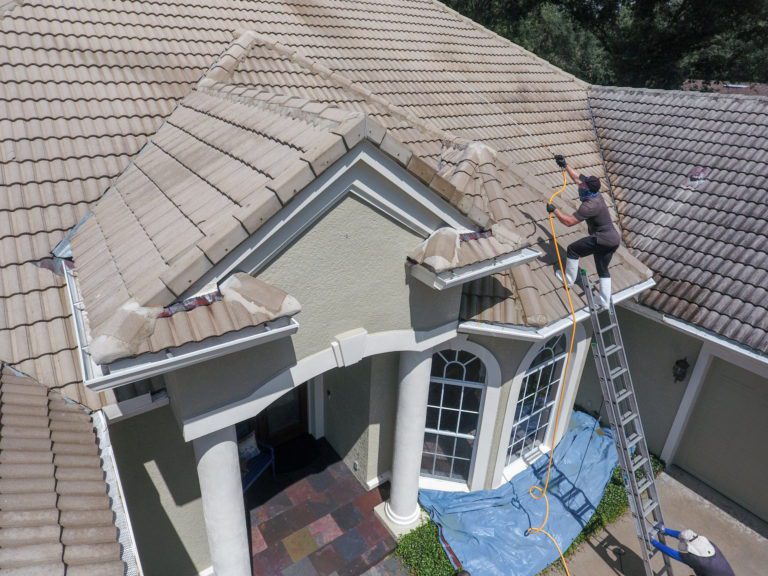
Tile roofs are extremely durable but develop significant biological growth in Florida’s climate — especially on the north-facing slopes that receive less direct sun. Pressure washing tile can crack individual tiles or break the brittle mortar at ridges and hips. Soft washing cleans tile safely and thoroughly without risk of breakage.
Metal Roofs
Metal roofs develop algae, mold, and oxidation over time. They’re more tolerant of moderate pressure than shingles or tile, but soft washing is still the preferred method because it treats biological growth chemically and prevents rapid regrowth.
Flat/Low-Slope Roofs (Commercial)
Common on commercial buildings and Florida-style homes. EPDM rubber and TPO membranes require careful, low-pressure cleaning with compatible chemical solutions to avoid membrane damage.
DIY Roof Cleaning: Why It’s a Bad Idea
Every season, homeowners try to tackle roof cleaning themselves — and every season, we get calls from people who’ve damaged their roofs, voided their warranties, or gotten hurt trying. Here’s why DIY roof cleaning is a risk not worth taking.
Slip and Fall Danger
Roofs are inherently dangerous to walk on, and a wet roof covered in algae is essentially an ice rink at a steep angle. Falls from rooftop heights cause serious injury and death. Professional roof washers have specialized safety equipment, non-slip footwear, and harness systems. Homeowners typically have none of these.
Voiding Your Roof Warranty
Most shingle manufacturers require that cleaning be performed using ARMA-approved low-pressure methods. Using a pressure washer — even at moderate PSI — can void your roof’s warranty entirely. If you later file a claim for premature granule loss, the manufacturer may deny it based on evidence of improper cleaning.
Wrong Chemicals, Wrong Results
Consumer-grade roof cleaning products are often either too weak (meaning the algae regrows quickly) or improperly formulated (meaning they damage shingles, kill landscaping, or leave residue that attracts more biological growth). Professional solutions use the right concentration of sodium hypochlorite paired with surfactants and neutralizers — applied by someone trained to do it safely.
Inadequate Equipment
Achieving proper soft washing coverage requires specialized low-pressure pumps and spray systems that deliver solution evenly across the entire roof. A standard pressure washer on its lowest setting doesn’t produce the right pressure or flow rate for effective soft washing.
What JBC’s Roof Soft Washing Process Looks Like
At JBC Pressure Washings, our roof soft washing process is systematic, safe, and backed by a 5-year warranty. Here’s what to expect from start to finish:
- Free quote and inspection. We assess your roof type, the extent of biological growth, and any areas of concern before pricing the job.
- Pre-treatment protection. We wet down and cover surrounding landscaping to protect plants from cleaning solution runoff.
- Solution application. Our eco-friendly Enviro Bio Cleaner solution is applied to the entire roof surface using low-pressure soft wash equipment, starting from the bottom and working up.
- Dwell time. The solution is allowed to sit and work — breaking down and killing algae, mold, lichen, and other biological growth at the cellular level.
- Gentle rinse. We rinse the roof at low pressure, washing away all dead biological matter and cleaning solution residue.
- Final inspection. We walk the property to confirm results meet our standards and check that landscaping and surrounding surfaces are clean.
We use Enviro Bio Cleaner — a biodegradable, plant-safe cleaning solution that delivers professional-grade results without harsh chemical runoff. It’s safe for your pets, your plants, and the surrounding environment.
How Long Do Soft Washing Results Last?
Most Orlando homes can expect clean results to last 2 to 3 years following a professional soft wash. Several factors influence longevity:
- Tree coverage: Roofs shaded by large oak or pine trees tend to reaccumulate biological growth faster because they stay moist longer and receive less UV light.
- Roof pitch: Steeper roofs drain faster and dry more quickly, which slows algae regrowth.
- Algae-resistant shingles: Some modern shingles contain copper granules that slow algae growth. These roofs may stay cleaner longer.
- Proximity to water: Homes near lakes, ponds, or retention areas in Central Florida tend to see faster regrowth due to higher airborne spore counts.
At JBC, we offer a 5-year warranty on our soft washing work — if growth returns within that window, we’ll come back and treat it. That’s our confidence in the process and the products we use.
Roof Soft Washing Cost Guide for Orlando (2026)
Pricing varies based on roof size, pitch, story count, and degree of biological growth. Here are typical ranges for Orlando-area homes:
| Home Size | Estimated Cost |
|---|---|
| Small home (under 1,500 sq ft) | $250 – $350 |
| Mid-size home (1,500–2,500 sq ft) | $350 – $475 |
| Large home (2,500–3,500 sq ft) | $475 – $600 |
| Extra-large or multi-story | $600+ |
These are general estimates. The best way to know your exact cost is to request a free quote from JBC. We’re transparent about pricing — no surprises on the day of service.
Compare that to the cost of early roof replacement ($8,000–$20,000+) due to algae-accelerated shingle deterioration, and professional soft washing is one of the highest-ROI home maintenance services available.
Frequently Asked Questions About Roof Soft Washing in Orlando
Is soft washing safe for all roof types?
Yes. Soft washing at low pressure (under 200 PSI) is safe for asphalt shingles, clay tile, concrete tile, metal, and most low-slope roofing materials. JBC technicians are trained to adjust solution strength and application method based on your specific roofing material.
Will the cleaning solution damage my plants or landscaping?
JBC uses Enviro Bio Cleaner, a biodegradable solution that is safe for plants when properly diluted and rinsed. We also pre-wet landscaping and cover sensitive plants before we begin, and rinse the surrounding area after we’re done.
How do I know if my roof needs soft washing?
Black or dark green streaks on your shingles or tiles are the clearest sign. Fuzzy moss or lichen patches, a general dull or dirty appearance, or visible discoloration on the north-facing slope of the roof are all indicators. If it’s been more than 2–3 years since your last cleaning, it’s worth scheduling an inspection even if you don’t see obvious staining.
Can soft washing fix a roof that’s already damaged by algae?
Soft washing can remove existing biological growth and stop further deterioration, but it can’t reverse damage that has already occurred. If algae have been eating into your shingles for years, you may have granule loss or moisture damage that requires repairs. We can identify concerning areas during our pre-service inspection.
Do I need to be home during the service?
Not necessarily. As long as we have access to the exterior of the property and know where the water shutoff is (in case of emergency), we can complete the job without you present. Many of our clients are at work when we service their homes.
How does JBC’s 5-year warranty work?
If biological growth returns to your roof within 5 years of our service, we will return and re-treat the affected areas at no charge. The warranty applies to the same surfaces we treated and assumes no structural changes to the roof during that period.
Can HOAs require me to have my roof soft washed?
Yes, and it’s extremely common in Central Florida HOA communities. Many HOAs include roof cleanliness standards in their CC&Rs and issue violation notices for visible algae or staining. JBC works regularly with homeowners who need to meet HOA deadlines — and we can often schedule within a few days.
Ready to Schedule Your Orlando Roof Soft Wash?
JBC Pressure Washings is a family-owned, fully insured pressure washing company serving Orlando and all of Central Florida. We specialize in roof soft washing and back every job with our 5-year warranty and eco-friendly cleaning process.
Don’t let algae eat your roof from the outside in. Request your free quote today — and let’s get your roof looking the way it should.
Related: Roof soft washing services · Orlando pricing
Ready for a free Orlando-area quote?
JBC Pressure Washings — Florida credential #W027740, $1M insured, 5.0-star Google rating. Soft wash & pressure washing across Orlando and Central Florida.
Request a free quote
(407) 821-1863
Services ·
Pricing ·
Commercial ·
Orlando ·
Cities we serve