How Often Should You Pressure Wash Your House in Florida?
If you’ve moved to Orlando, Kissimmee, Oviedo, or anywhere else in Central Florida from a northern state, the advice you used to follow about home exterior maintenance no longer applies. Generic home care guides that suggest washing your house exterior “every three to five years” were written for climates with cold winters, low humidity, and far less biological activity. Florida is a different world.
Here, the combination of subtropical humidity, year-round warmth, intense UV exposure, daily summer rainfall, and lush surrounding vegetation means your home’s exterior is constantly under biological assault. Algae, mold, mildew, lichen, and moss don’t take seasons off in Central Florida — and your cleaning schedule shouldn’t either.
This guide provides a surface-by-surface cleaning schedule for Florida homes, plus context on what happens when cleaning is deferred and what HOA deadlines you should be aware of.
Why Florida Homes Need More Frequent Cleaning Than the National Average
The national average recommendation for exterior house washing is every one to three years. In Central Florida, most surfaces need attention on the shorter end of that range — and some need it more frequently than that. Here’s why:
- Humidity never fully drops. Even in winter, Central Florida humidity rarely falls below 50–60%. Biological growth thrives in humidity above 55%. There’s no dry season in Florida that naturally kills mold and algae the way dry climates do.
- Temperatures stay warm year-round. Biological growth accelerates at temperatures above 60°F. Orlando’s average low temperature, even in January, is around 50°F — meaning growth is active for more of the year than in any northern climate.
- Rainfall is extreme in summer. Central Florida averages 54 inches of rain annually, with the majority falling June through September. This sustained moisture keeps surfaces wet for extended periods, accelerating biological colonization.
- Tree canopy contributes organic material. Florida’s abundant oaks, palms, and pine trees drop pollen, leaves, and organic debris onto roofs, gutters, and driveways continuously. This organic material feeds algae and mold.
- Proximity to water bodies. Much of Central Florida — including Orlando, Windermere, Clermont, and surrounding areas — is built around lakes, ponds, and wetlands. Homes near water experience higher moisture levels and more aggressive biological growth than homes in drier inland settings.
Recommended Cleaning Schedule by Surface
Roof: Every 2–3 Years
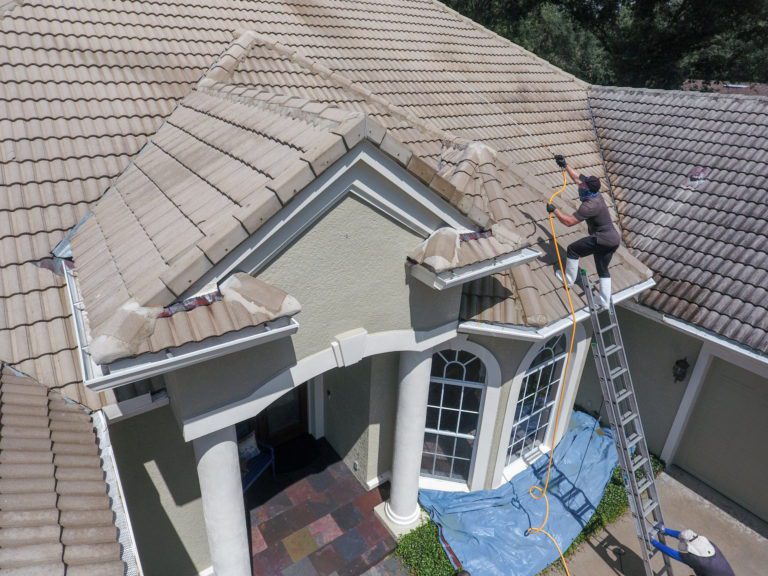
Your roof is the most important exterior surface to maintain on a schedule — and the one where deferred cleaning causes the most expensive damage. In Central Florida, most roofs begin showing visible biological growth within one to two years of their last cleaning. Black streaks from Gloeocapsa Magma algae, moss on north-facing slopes, and lichen on tile roofs are all signs that cleaning is overdue.
For asphalt shingle roofs, a soft wash treatment every two years is a reasonable maintenance cycle. Tile roofs — both clay and concrete — may go slightly longer between cleanings but are more susceptible to lichen, which chemically bonds to the tile surface and becomes harder to remove the longer it’s left.
Schedule our roof soft washing service when you see the first signs of darkening or streaking — don’t wait until the growth is well-established, as removal becomes more involved and more expensive the longer biological growth has had to set in.
Driveway and Walkways: Annually
Concrete driveways in Central Florida should be professionally cleaned at least once per year. Green algae growth on concrete is accelerated by shade from trees and cars, and the combination of summer rain and warmth can produce a visibly green or slippery driveway surface within a few months of the last cleaning.
Beyond appearance, algae and mold on concrete create genuine slip hazards — particularly in rainy season when surfaces are frequently wet. Oil stains from vehicle parking also accumulate and bond to concrete over time, becoming significantly harder to remove after they’ve had time to penetrate the pores of the surface.
Annual driveway and patio cleaning keeps surfaces safe, removes staining before it becomes permanent, and prevents the microscopic surface degradation that occurs when biological growth is left to colonize porous concrete.
Exterior Siding: Every 1–2 Years
Stucco, vinyl siding, Hardie board, and painted wood all accumulate a combination of pollen deposits, mildew, algae, and general environmental grime over the course of a Florida year. North-facing walls are the fastest to develop visible growth — they receive the least sunlight and stay damp longest after rain.
Stucco in particular benefits from regular maintenance because biological growth that’s allowed to embed deeply becomes harder to remove and can cause moisture issues if left long enough. Annual or biennial exterior washing keeps the cleaning manageable and prevents the buildup from reaching problematic levels.
Gutters: Twice Per Year
Gutters should be cleared and flushed twice annually in Central Florida — once in spring after pollen and winter debris accumulation, and once in late fall after the hurricane season and summer leaf drop have loaded them with organic material. A full spring flush ensures gutters are operating at maximum capacity before summer rains begin. A fall flush clears the summer’s accumulated debris before winter rains.
Blocked gutters are one of the most common preventable causes of exterior water damage on Florida homes. Overflowing gutters direct water against fascia boards, into wall cavities, and against your home’s foundation — damage that compounds over time and becomes expensive quickly.
Fences: Every 1–2 Years
Vinyl and aluminum fencing in Central Florida typically needs cleaning every one to two years. Vinyl fencing in shaded yards — particularly along fence lines with tree coverage or near retention ponds — may need annual cleaning due to accelerated green and black algae growth. Wood fencing is more maintenance-intensive and should be cleaned and inspected annually, with periodic staining or sealing to maintain the wood’s moisture resistance.
Pool Deck: Annually
Pool decks — whether concrete, pavers, or tile — are in constant contact with water from pool splashing, rain, and irrigation. This sustained moisture, combined with shade from screen enclosures, creates ideal conditions for algae and mold growth. Slippery pool decks are a safety hazard, particularly around water. Annual cleaning restores traction and appearance, and the close inspection that comes with cleaning often reveals cracks or settling that should be addressed before they become larger structural issues.
HOA Requirements and Inspection Deadlines
Many neighborhoods throughout Central Florida — including communities in Celebration, Lake Nona, Hunters Creek, Windermere, and Winter Garden — are governed by homeowners associations with appearance standards that include exterior cleanliness requirements. These are not suggestions.
HOA violations for dirty, algae-covered, or stained exteriors can result in:
- Written warnings with mandatory compliance deadlines (often 30–60 days)
- Daily fines for non-compliance after the deadline
- Required re-inspection fees
- In extreme cases, liens against the property
If you receive an HOA notice about exterior appearance, act quickly. A professional exterior cleaning can typically be scheduled within one to two weeks and will resolve most appearance violations in a single visit. Contact us as soon as you receive a notice to ensure we can meet your compliance deadline.
The Cost of Skipping Cleanings
The financial case for regular exterior maintenance is compelling when you compare cleaning costs to repair costs:
- Roof cleaning vs. roof replacement: Regular soft washing every 2–3 years costs $300–$600. Premature roof replacement caused by algae degradation costs $8,000–$20,000+. The math is unambiguous.
- Driveway cleaning vs. driveway resurfacing: Annual driveway cleaning costs $75–$200. Resurfacing a standard two-car driveway runs $1,500–$5,000. Replacement can exceed $8,000.
- Gutter cleaning vs. fascia repair: Biannual gutter cleaning costs $99–$199 per visit. Replacing rotted fascia boards runs $6–$12 per linear foot — and a single overflowing gutter season can affect 40–60 feet of fascia.
- Siding cleaning vs. moisture remediation: Exterior siding cleaning every one to two years costs $150–$400. Interior moisture damage from compromised stucco — mold remediation, insulation replacement, drywall repair — can run $5,000–$20,000 or more depending on severity.
Frequently Asked Questions
Q: How often should I pressure wash my house if I have a lot of trees nearby?
A: Homes with significant tree coverage typically need more frequent exterior cleaning — potentially once a year for siding and every 18 months for roofs. Trees drop organic material (pollen, leaves, seed pods) that feeds biological growth, and their shade keeps surfaces damp longer after rain. If your home is surrounded by mature oak or pine trees, plan for annual cleaning as the baseline.
Q: My house was just built. How soon should I schedule my first exterior cleaning?
A: New construction homes in Central Florida typically need their first exterior cleaning within 12–18 months of move-in. Construction dust, landscaping establishment, and the initial exposure to Florida’s humidity and pollen create a quick first-year buildup. A first cleaning that addresses this early accumulation sets a good baseline for ongoing maintenance.
Q: Can I pressure wash my own driveway once a year to avoid hiring a professional?
A: For a standard concrete driveway without significant staining, tree overhang, or biological growth, DIY cleaning is feasible if you use appropriate equipment and technique. However, professional cleaning reaches a more thorough result — particularly for oil stains and embedded organic growth — and the cost difference is often smaller than homeowners expect.
Q: Does pressure washing frequency affect home resale value?
A: Yes, directly and indirectly. Visibly clean exteriors improve curb appeal, which affects buyer perception and can support higher offers. More importantly, regular maintenance prevents the surface damage that requires expensive repair before a home can be listed. Buyers and home inspectors in the Orlando area pay attention to roof staining, mold on siding, and driveway condition.
Q: How do I know if my HOA has exterior cleaning requirements?
A: Review your HOA’s CC&Rs (Covenants, Conditions, and Restrictions) and any community standards documents. Most HOA appearance standards include exterior cleanliness requirements — often specifying that mold, mildew, and algae must be addressed within a certain time period. If you’re unsure, contact your HOA directly before you receive a violation notice.
Q: Does JBC offer maintenance plans so I don’t have to remember to call every year?
A: Yes. We offer scheduled maintenance agreements for Central Florida homeowners who want to stay ahead of exterior buildup without the hassle of remembering to schedule each season. Contact us to discuss a plan customized to your home’s surfaces and maintenance needs.
Ready for a Spotless Property in Orlando?
JBC Pressure Washings serves all of Central Florida. Licensed, insured, and backed by our 5-year warranty.
Ready for a free Orlando-area quote?
JBC Pressure Washings — Florida credential #W027740, $1M insured, 5.0-star Google rating. Soft wash & pressure washing across Orlando and Central Florida.
Request a free quote
(407) 821-1863
Services ·
Pricing ·
Commercial ·
Orlando ·
Cities we serve