Spring Cleaning Your Home Exterior: Florida Edition
Spring cleaning in Florida isn’t about dusting shelves and organizing closets — it’s about battling what the outdoors throws at your home all winter long. Even in Central Florida, where winters are mild, the months between November and March bring their own accumulation of grime: pollen, mildew, road dust, and the early stages of biological growth that explode in the heat and humidity of summer.
By the time April arrives in Orlando, Ocoee, Longwood, or Deltona, your home’s exterior has collected months of buildup. Left unchecked heading into summer, that buildup accelerates into algae blooms, black streaks on your roof, stained driveways, and clogged gutters — all of which cost significantly more to fix than to prevent.
This guide walks you through every surface on your home’s exterior, what to look for, and how to handle it the right way for Florida’s unique climate.
Why Florida Homes Need Spring Exterior Cleaning
Florida’s climate is exceptional — and not always in a homeowner’s favor. The combination of subtropical humidity, intense UV exposure, frequent rainfall, and lush surrounding vegetation creates ideal conditions for biological growth on virtually every exterior surface.
- Pollen season peaks in spring. Central Florida’s oak, pine, and cedar trees produce heavy pollen from February through April. That yellow-green film coats roofs, gutters, driveways, and siding — and when it mixes with moisture, it feeds algae and mold.
- Rainy season starts in June. You have a narrow window between peak pollen and the arrival of Florida’s summer storm season. Spring cleaning before June means you go into the wettest months with a clean surface — not one already compromised.
- Biological growth is cyclical. Algae and mold spores that weren’t fully eliminated last year re-activate in warming temperatures. Catching them early in spring prevents a full outbreak by midsummer.
- HOA deadlines. Many communities in Orlando, Lake Nona, and the surrounding areas enforce appearance standards with spring inspection cycles. Addressing exterior cleaning proactively keeps you ahead of citations.
Your Complete Spring Exterior Checklist
Roof
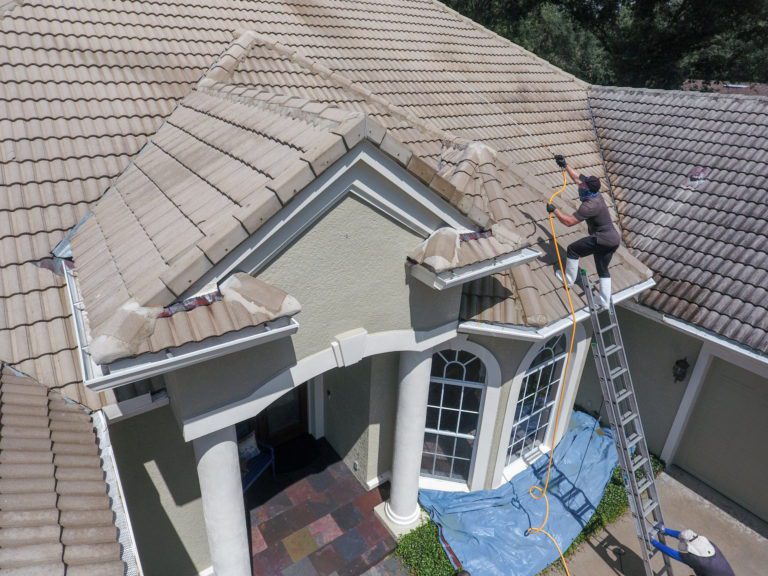
Your roof is the surface most affected by Florida’s biological growth. Black streaks are caused by Gloeocapsa Magma, a cyanobacteria that feeds on the limestone in your shingles. The correct method is roof soft washing — low pressure with biodegradable cleaning solutions.
Gutters and Downspouts
Gutters work all winter collecting debris. A blocked gutter in Florida is a serious problem. Our gutter cleaning service covers full flush and inspection.
Driveway and Walkways
Concrete and paver driveways accumulate oil stains, tire marks, pollen deposits, and green algae. Professional driveway cleaning uses appropriate PSI for your surface type.
Lanai and Screened Porch
Florida’s screened enclosures and lanais collect pollen, mildew, and green algae on every horizontal surface. Soft washing the enclosure structure and screening restores clarity and removes mold.
Fencing and Gates
Vinyl, wood, and aluminum fencing all develop algae, mildew, and dirt accumulation through winter. Spring is the ideal time to restore fencing before summer humidity drives growth deeper.
Siding and Fascia
Stucco, vinyl, Hardie board, and painted wood siding all accumulate grime, pollen, and early-stage mold. Pay particular attention to north-facing walls, which receive the least sunlight and stay damp longest after rain.
Best Time to Schedule in Central Florida
- March: Pollen season in full swing — ideal for soft washing solutions to dwell without rapid evaporation.
- April: The optimal window — pollen tapering, rainy season hasn’t arrived.
- May: Still good timing, but book early — companies fill up fast.
Frequently Asked Questions
Q: How often should I have my home’s exterior cleaned in Central Florida?
A: Most Central Florida homes benefit from a full exterior cleaning once a year, with roof soft washing every two to three years.
Q: Is spring cleaning necessary if my house looks relatively clean?
A: Yes — most biological growth begins below the surface visibility threshold. Spring cleaning removes growth in its early stages.
Q: Can pressure washing remove pollen from my roof?
A: Roofs should never be pressure washed. Soft washing safely removes pollen, algae, and debris with low pressure and appropriate cleaning solutions.
Q: Will exterior cleaning damage my plants and landscaping?
A: With the right products, no. JBC uses Enviro Bio Cleaner, a biodegradable, plant-safe solution. Plants are pre-wetted and rinsed thoroughly after.
Q: How long does a full spring exterior cleaning take?
A: A standard single-story home typically takes two to four hours. Adding roof soft washing and gutter cleaning can extend to a full day.
Ready for a Spotless Property in Orlando?
JBC Pressure Washings serves all of Central Florida. Licensed, insured, and backed by our 5-year warranty.