Should You Pressure Wash Your Roof? (The Answer Is No — Here’s What to Do Instead)
Should You Pressure Wash Your Roof? (The Answer Is No — Here’s What to Do Instead)
It seems like a logical solution: your roof is dirty, a pressure washer blasts dirt off everything else, so why not use it on the roof? Here’s the problem — pressure washing your roof is one of the most damaging things you can do to it. It can destroy shingles, crack tiles, void your manufacturer’s warranty, and create leak pathways that cost thousands to repair. The right answer for a dirty, algae-stained roof isn’t pressure washing. It’s soft washing — a completely different process that delivers better results without the risk.
What Pressure Washing Actually Does to Your Roof
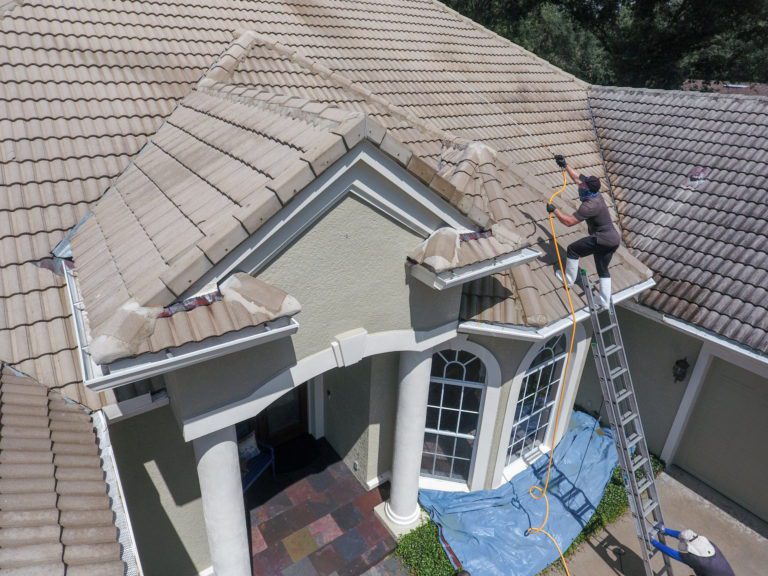
A standard pressure washer operates at 1,500 to 4,000 PSI. Asphalt shingles are coated with mineral granules that protect the shingle from UV radiation, reflect heat, and provide waterproofing. Pressure washing at high PSI blasts these granules off the shingle surface, accelerating aging by years in a single cleaning session. Clay and concrete tile roofs are extremely durable in normal conditions, but brittle under point impact — high-pressure water can crack individual tiles. High-pressure water directed upward or at lateral angles during cleaning can force water up under shingles, behind tiles, and into the underlayment, creating leak pathways.
Nearly every major shingle manufacturer specifies approved cleaning methods in their warranty documentation. The Asphalt Roofing Manufacturers Association (ARMA) explicitly states that low-pressure washing (under 1,200 PSI) with appropriate chemical solutions is the only approved method. A 30-year warranty can be voided in an afternoon.
The Real Problem: Gloeocapsa Magma Algae
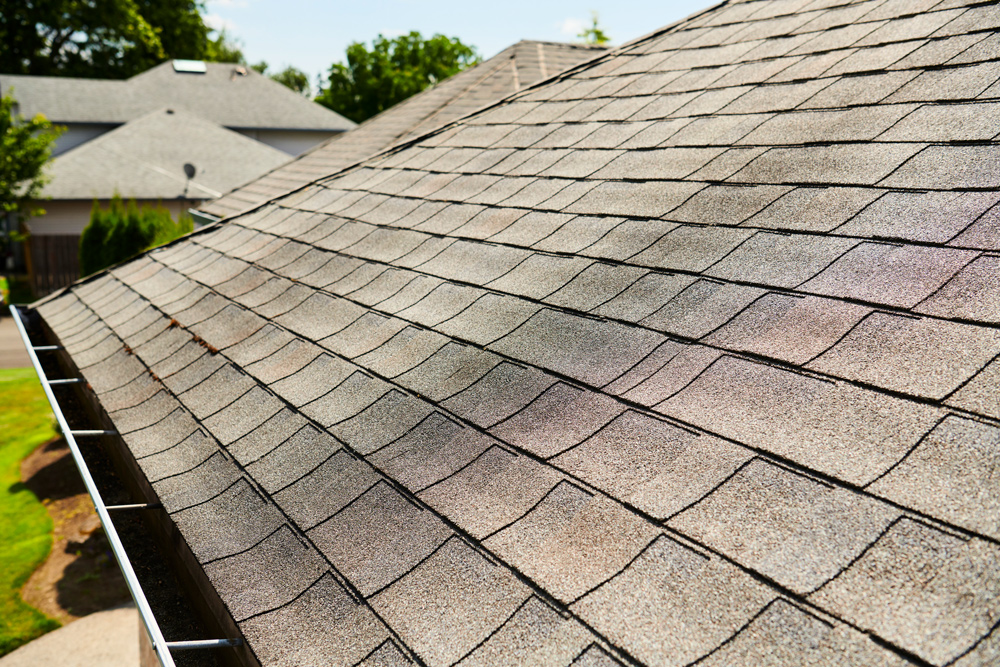
Those dark black streaks on Orlando roofs are caused by Gloeocapsa Magma — a cyanobacteria that thrives in warm, humid environments. It feeds on the limestone filler in asphalt shingles, retains moisture causing rot, and spreads across the entire roof over 2–3 years if untreated. Pressure washing can scrub away the visible streaks temporarily, but it does not kill Gloeocapsa Magma — the algae recolonizes the same surface within months. Soft washing uses a biocidal cleaning solution that kills the algae at the cellular level, producing results that last 2–3 years.
What Soft Washing Is — and Why It Works
Soft washing operates at 60–200 PSI — comparable to a standard garden hose. There is no risk of granule loss, tile cracking, or forced water infiltration. JBC Pressure Washings uses Enviro Bio Cleaner — a biodegradable, plant-safe formulation that delivers professional-grade results.
Cost Comparison
| Service | Typical Cost | Frequency |
|---|---|---|
| Roof soft wash | $300–$600 | Every 2–3 years |
| Roof repair (algae damage) | $500–$3,000+ | As needed |
| Full roof replacement | $8,000–$18,000 | Every 20–30 years |
Frequently Asked Questions
How do I know if my roof needs cleaning?
Dark streaks, greenish discoloration, visible moss or lichen patches, and a dull or dirty appearance are all signs. If it’s been more than 2–3 years, it’s worth an inspection even without obvious staining.
Is soft washing safe for tile roofs?
Yes. Soft washing at low pressure is safe for clay tile, concrete tile, and metal roofing. Tile roofs in Florida commonly develop algae and lichen growth and benefit significantly from regular soft washing.
Does JBC offer free quotes?
Yes. Request yours online and we’ll be in touch with pricing and availability.
Protect Your Roof the Right Way
JBC Pressure Washings provides professional roof soft washing in Orlando — eco-friendly, fully insured, backed by a 5-year warranty.